Improving the in-store experience and digital presence of a community-driven African grocery store.
A service design project focused on reducing congestion, improving navigation, and helping Adepa grow beyond word-of-mouth.
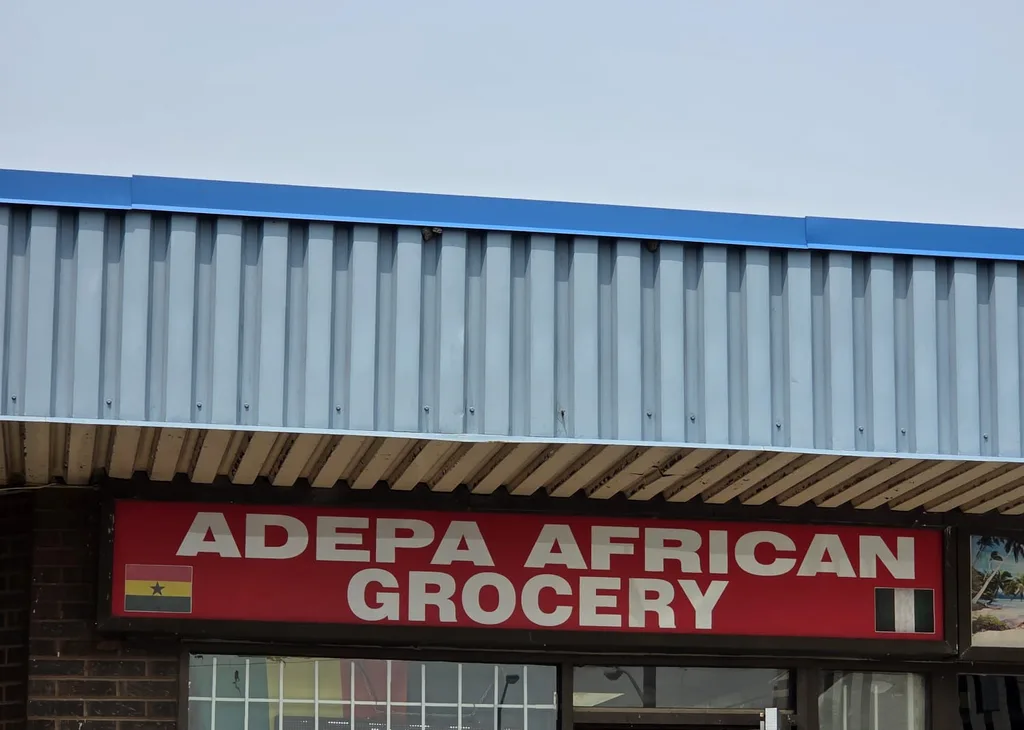
About Adepa
- Family owned business located in Toronto, Canada
- Founded 8 years ago by a Ghanaian couple
- The store sells groceries & essential commodities
Before we could design a solution, we needed to understand the real problem, so we broke it down into four clear steps.
- Research and Store visiting
- Defining the Problem
- Creating Solutions
- Feedback & Testing
Research & Store Visiting
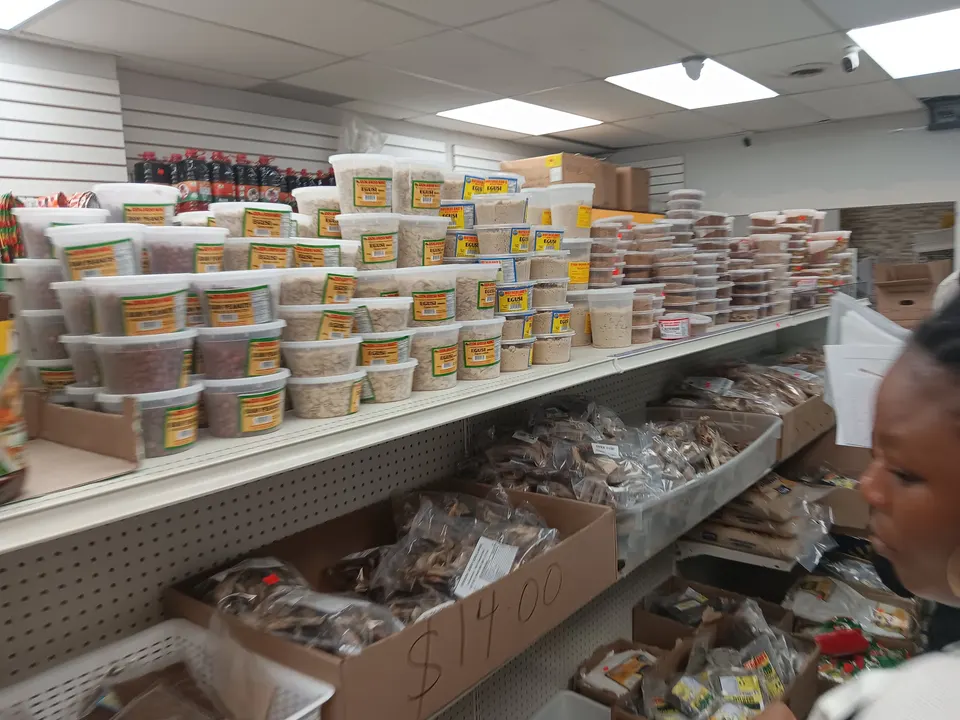
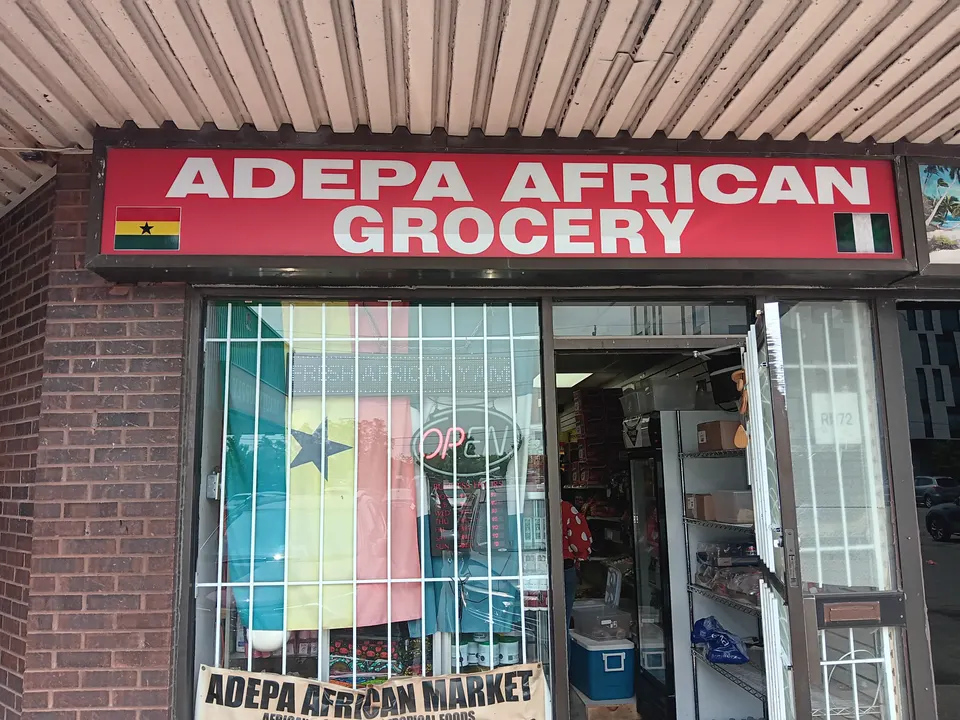
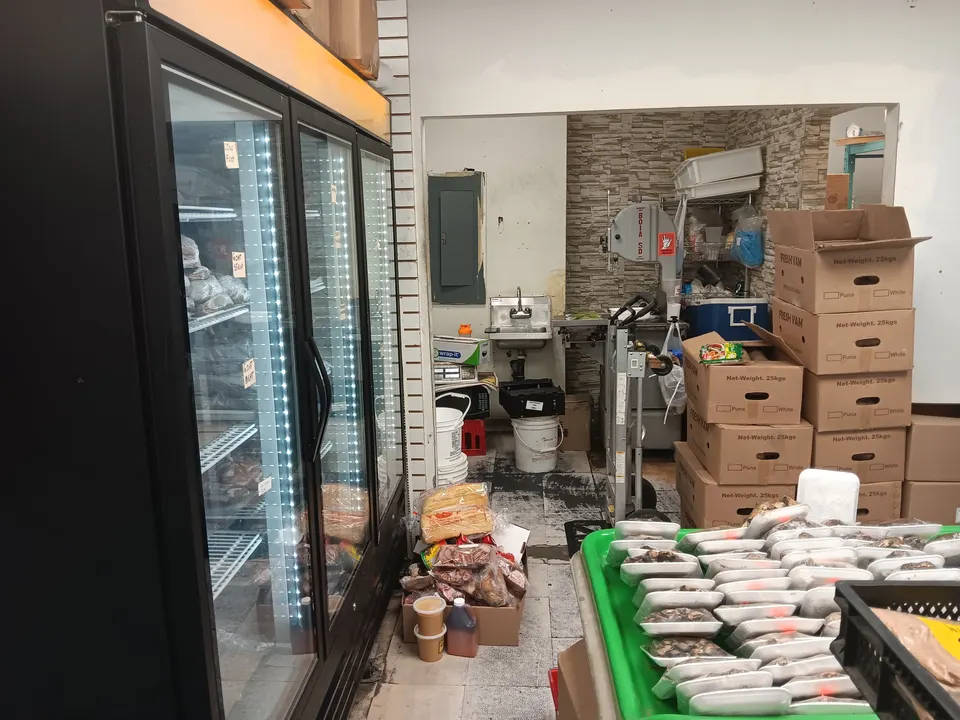
My team and I began with multiple site visits where we interviewed the store owner and manager, Mr. Adepa and his family.
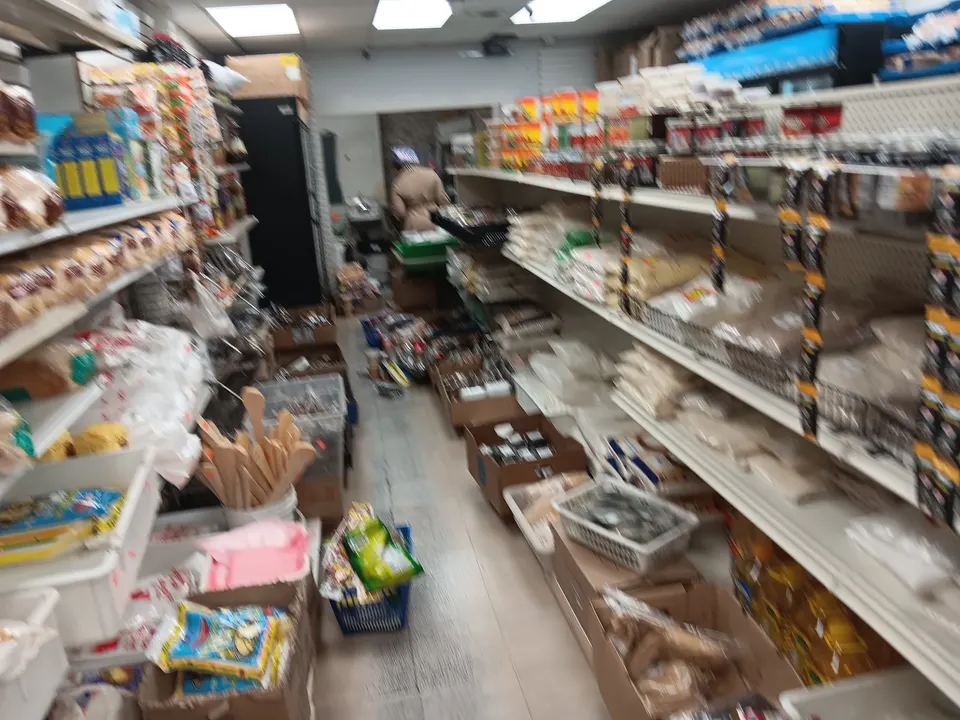
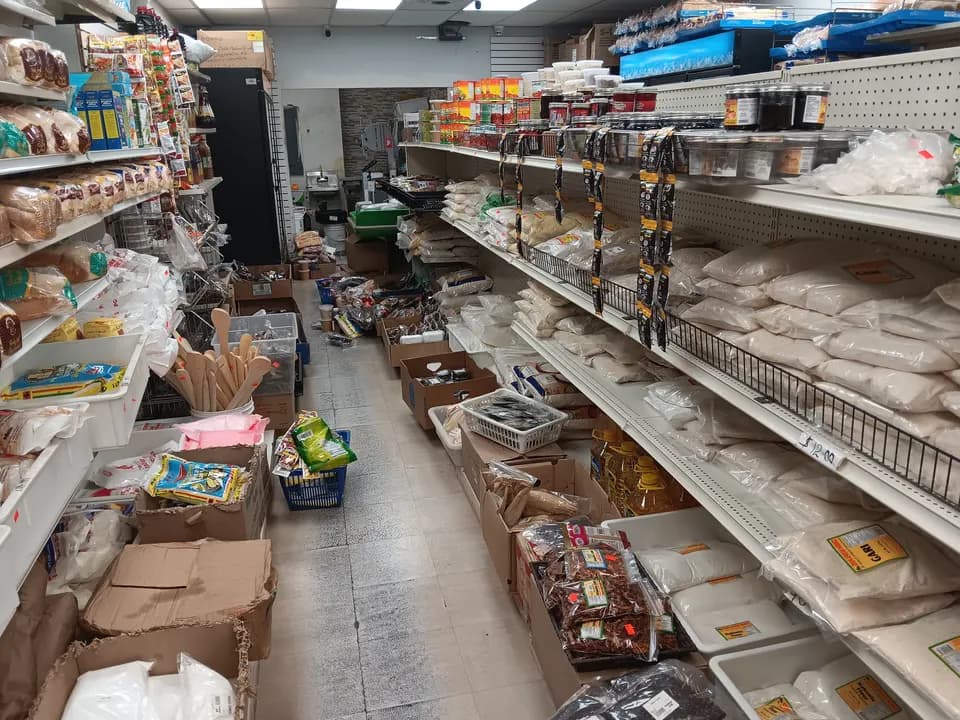
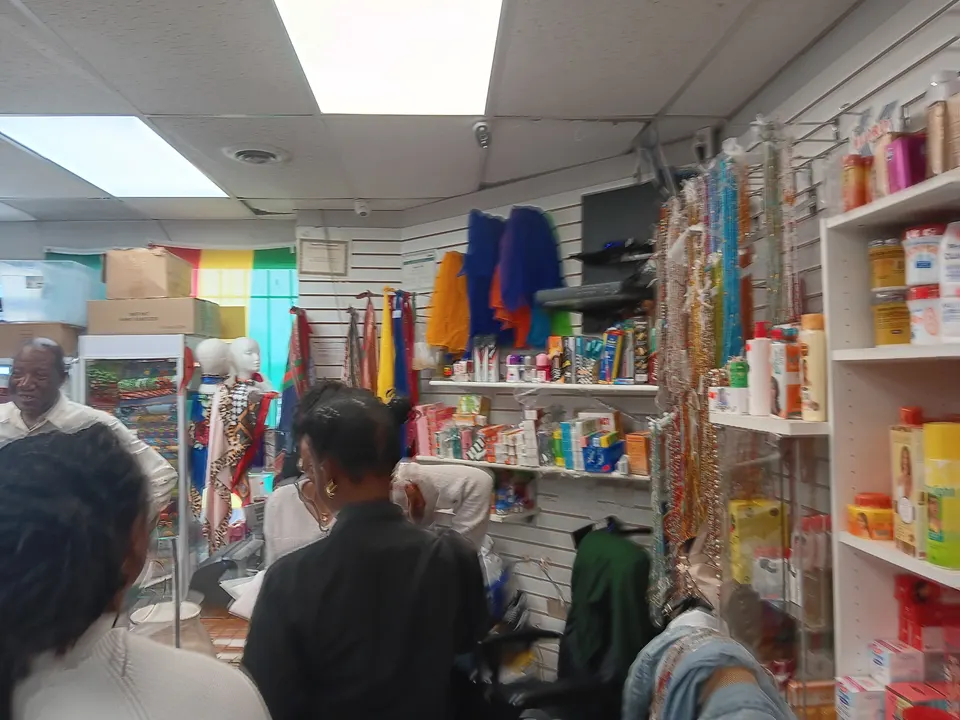
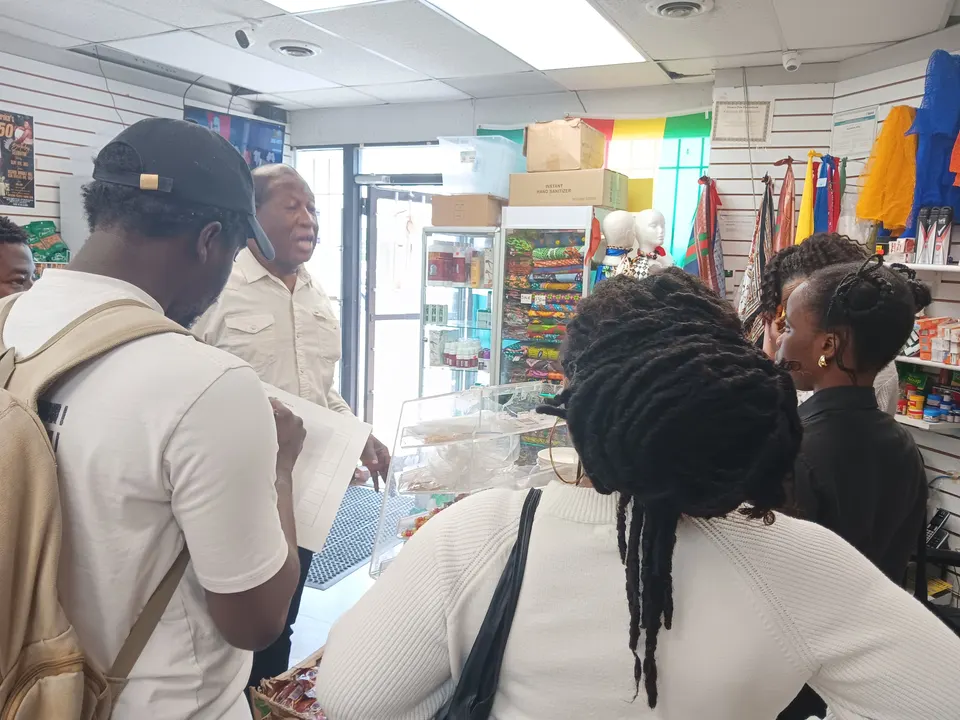
Research Questions
On getting there, We had to create 3 categories to be able to understand the pain points, So we asked questions based on these categories of people that use Adepa :
Customers
- We explored why customers come to Adepa
- The difficulties they encounter while shopping
- How smooth or stressful their experience is from start to finish

Store Owners & Employees
- What services do they offer to their customers?
- What are their service chain like? including front end and back end services?
- How do they keep their existing customers informed
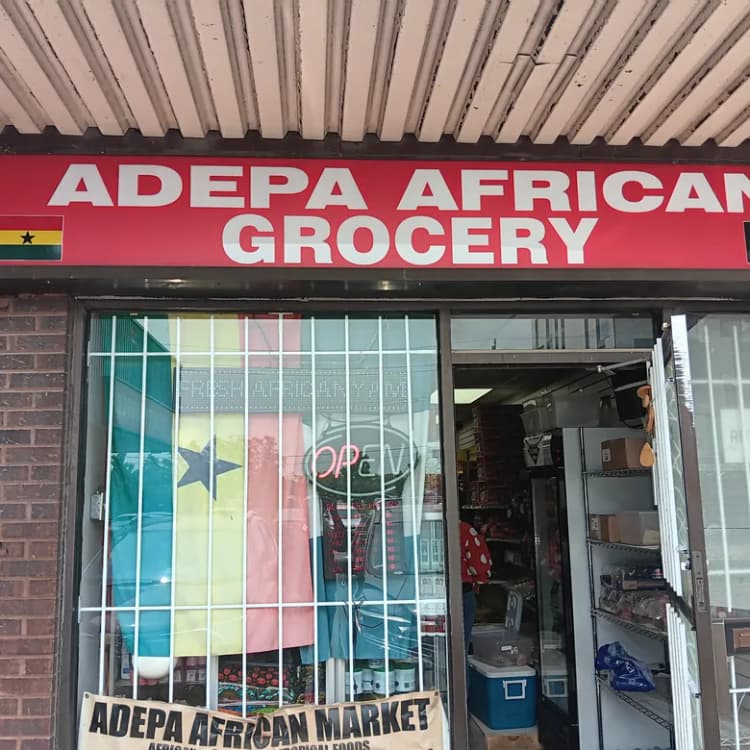
Business
- How did the business start?
- What is the background story of the business?
- Does the business like new customers every time or prefer returning customers?
After visiting the store, we needed to understand the whole system.
Before proposing solutions, we needed to understand the full ecosystem around Adepa — not just the customers, but everyone involved in delivering the experience.
To do this, we created a stakeholder map to identify key players and how they interact across the business.
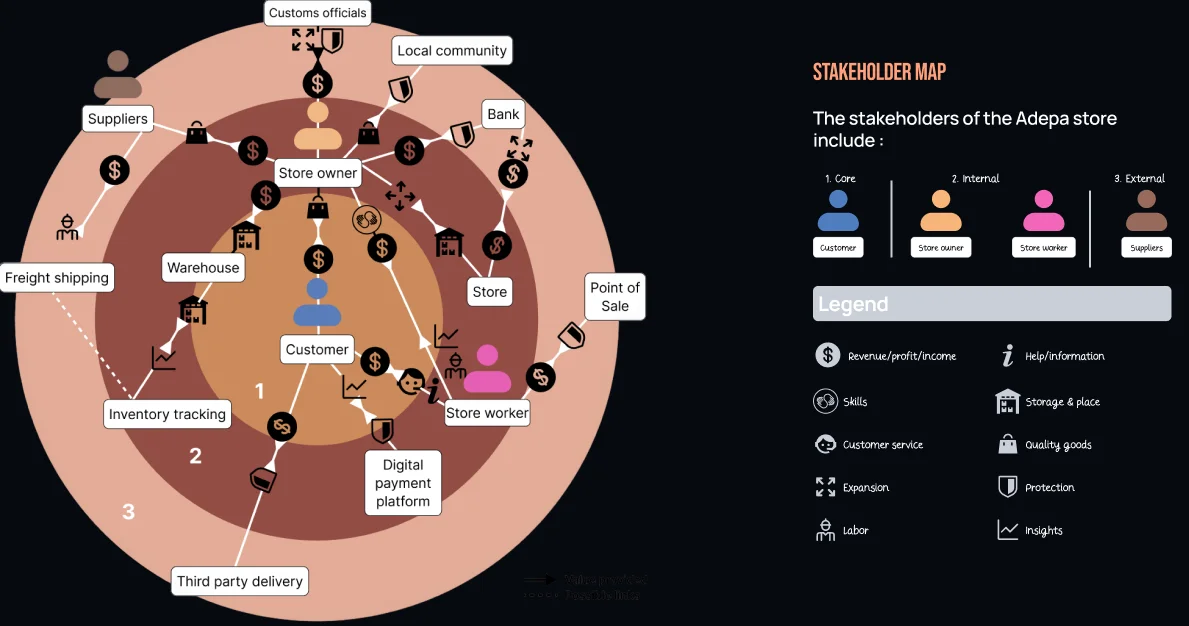
This stakeholder map illustrates all key players involved in Adepa's ecosystem, grouped by their proximity to the customer. It helped us understand how value flows across the business and identify gaps in operations, communication, and digital presence.
Following the stakeholder map, three personas were created to represent the key stakeholders that make up the business of the store. they include :
- Customer
- Store Attendant
- Store Manager
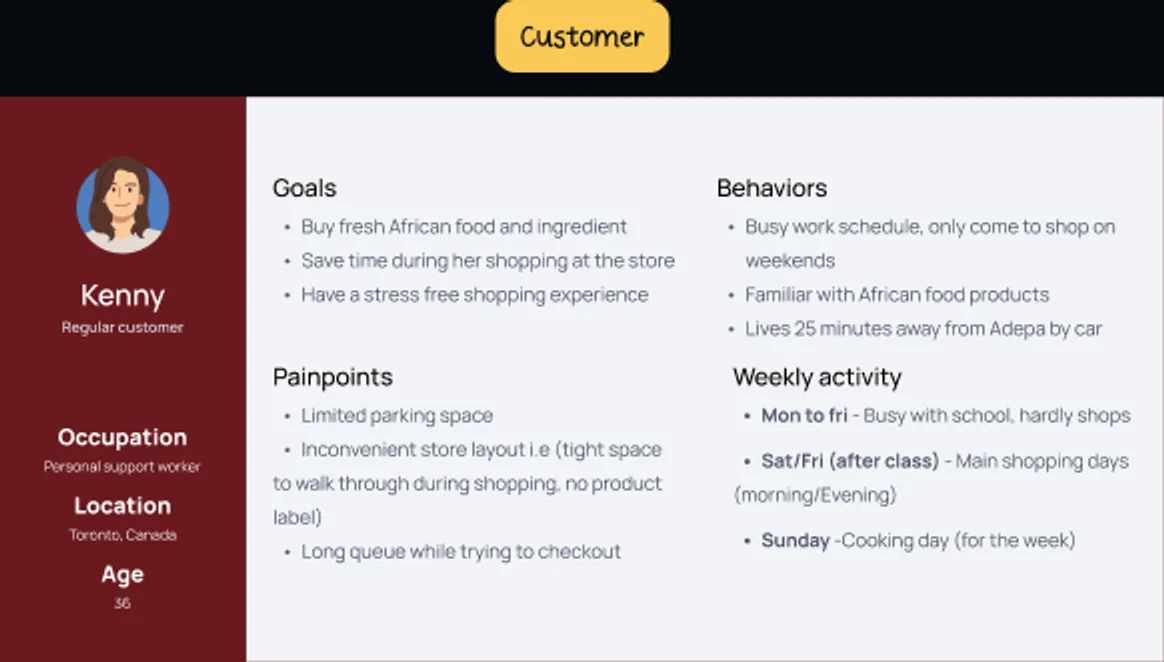
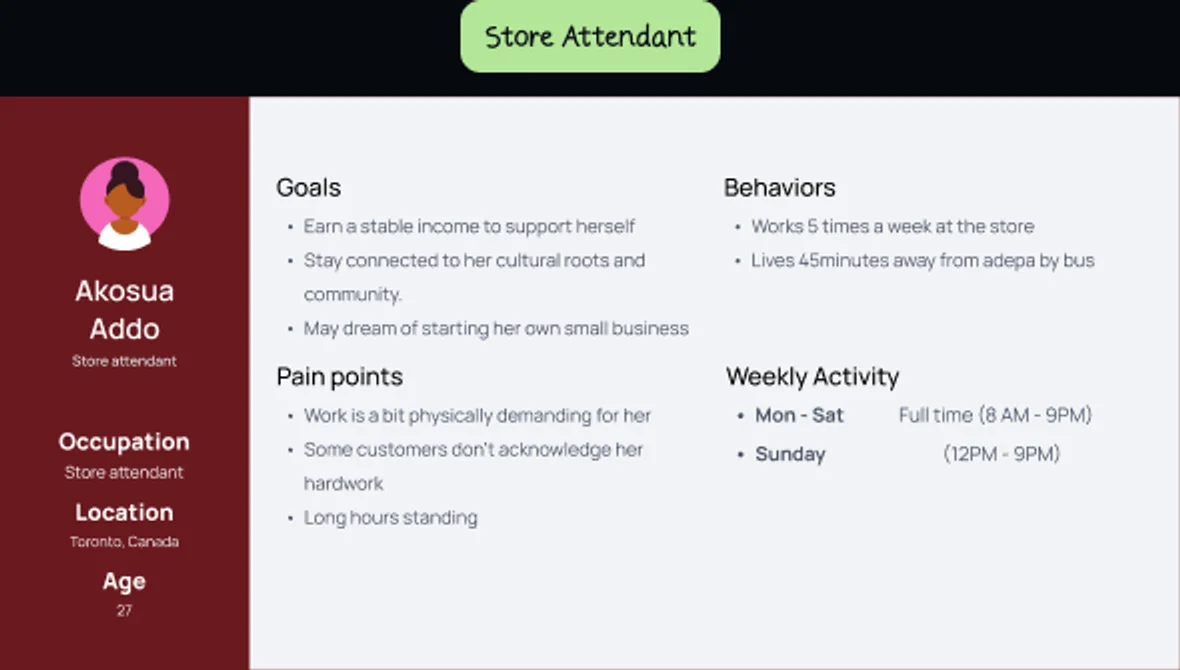
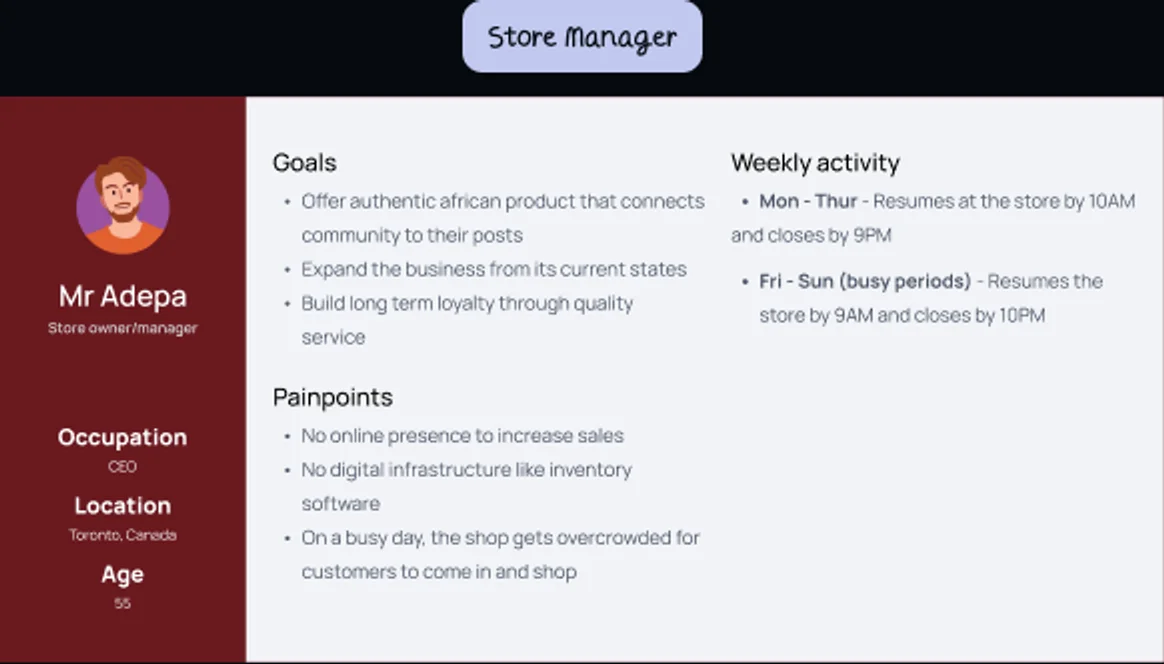
Customer Journey Map
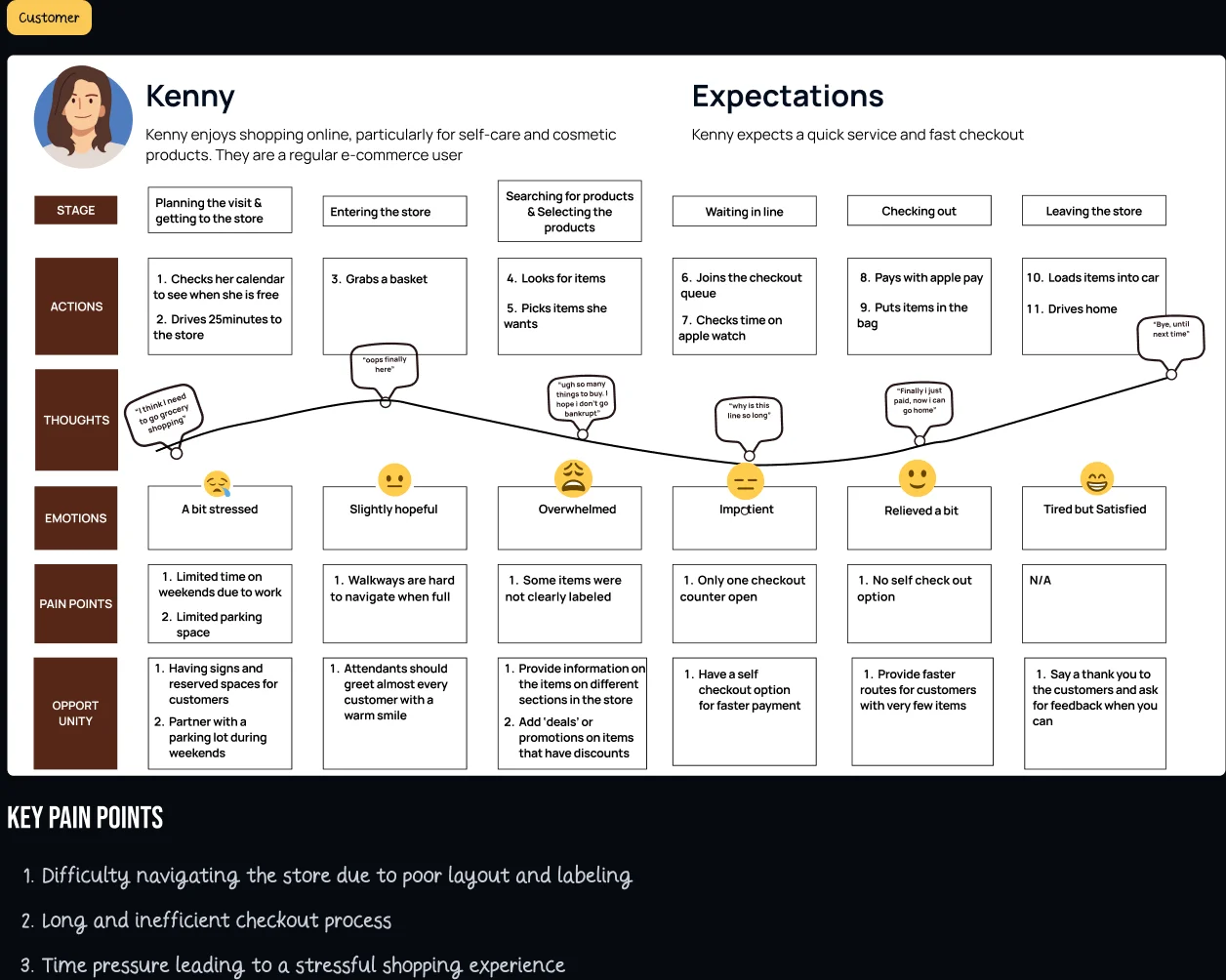
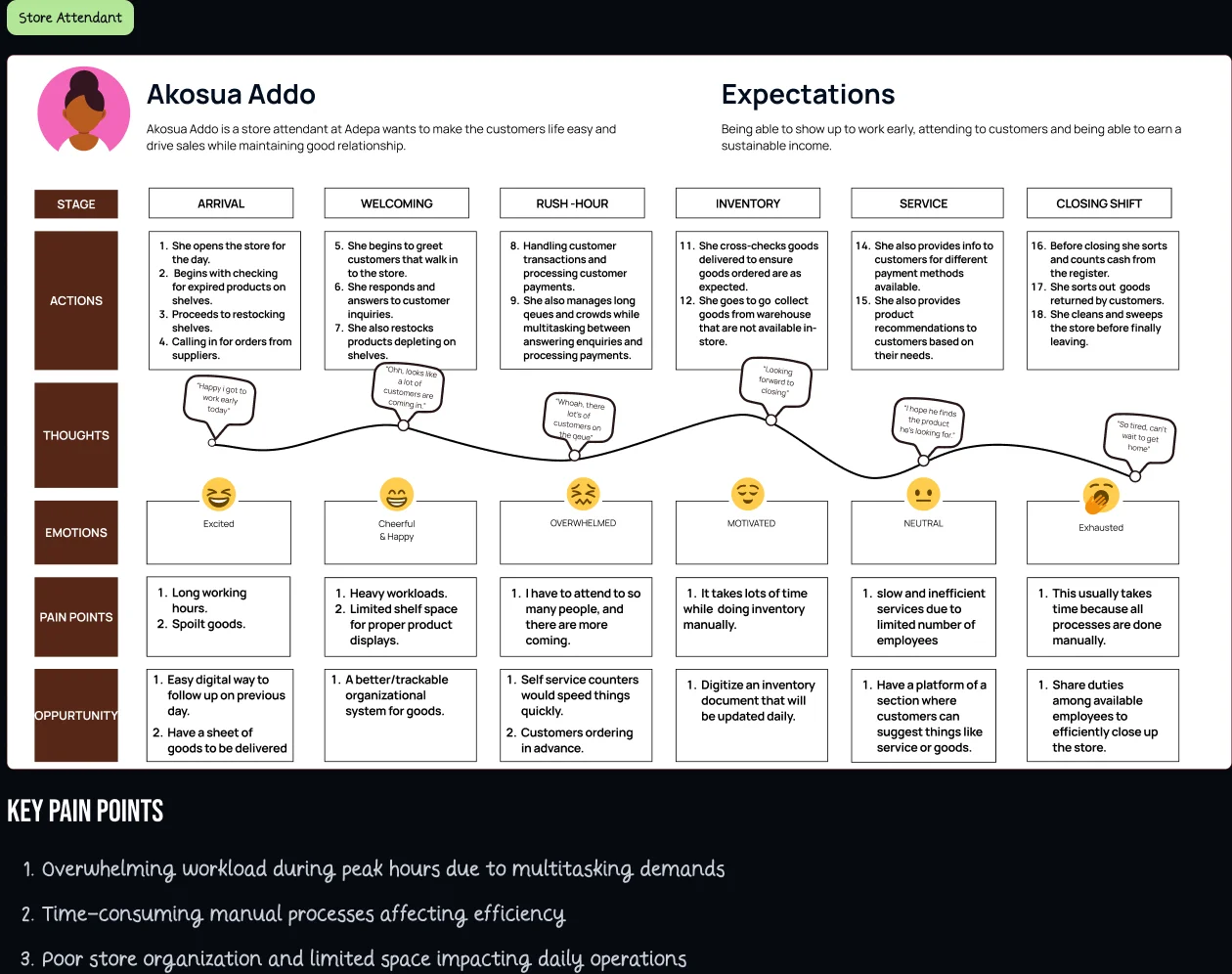
To better understand the end-to-end experience, we created journey maps for key stakeholders, capturing their actions, thoughts, emotions, and pain points at each stage of the service.
Customer — Kenny
Store Attendant — Akosua Addo
Store Manager — Mr. Adepa
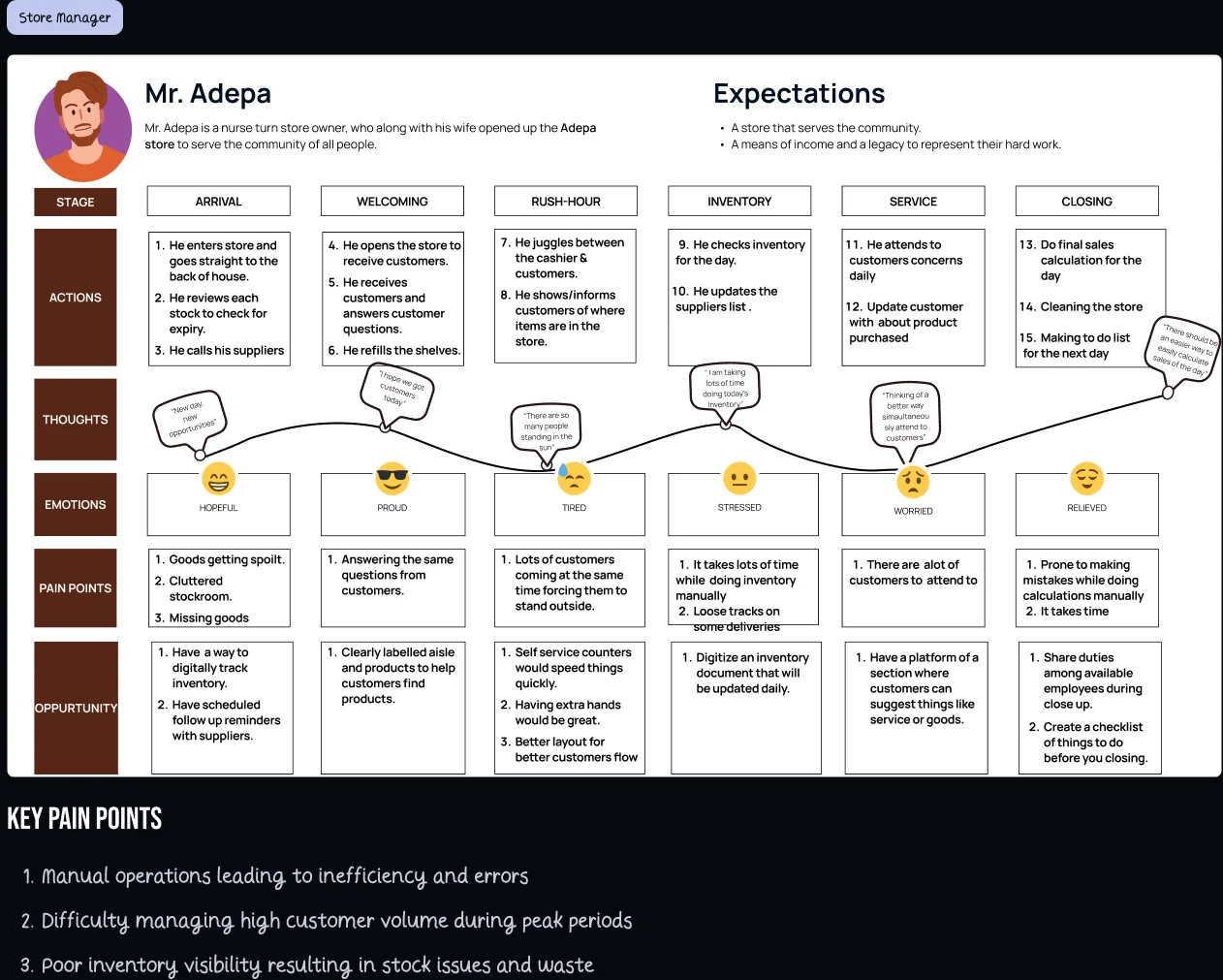
The journey map showed us where people were struggling, but it didn't show why. So we created a service blueprint to see what was happening behind the scenes that was causing those problems.
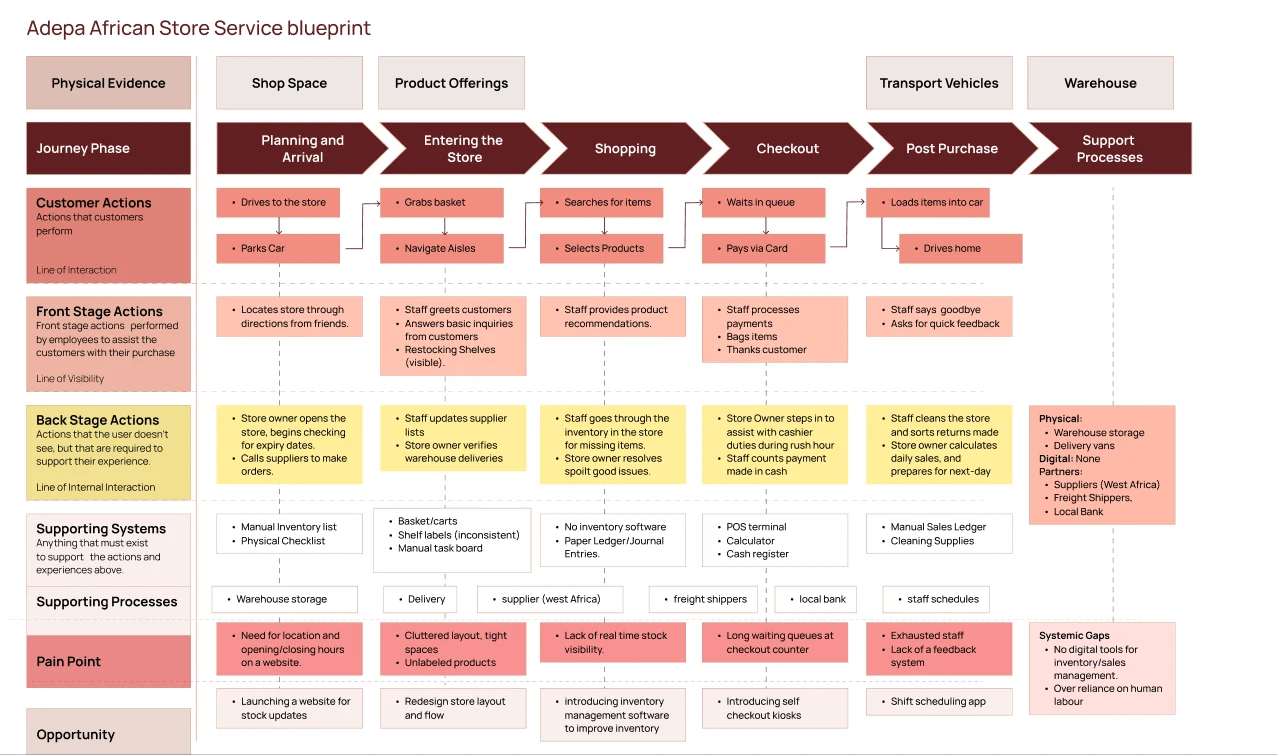
The service blueprint maps customer actions alongside frontstage and backstage operations, revealing how internal processes and systems contribute to the overall experience.
Key Insights
- No digital inventory system → leads to missing or spoiled goods
- Manual processes → slow operations and errors
- Limited checkout capacity → long queues
- Poor layout → difficult navigation
Insights from all the research done
Our research revealed a set of critical challenges affecting both the customer experience and business operations at Adepa.

- The store is physically constrained, leading to congestion and a frustrating shopping experience
- Operations rely heavily on manual processes, reducing efficiency and increasing errors
- The business lacks a digital presence, limiting visibility and growth opportunities
- Supply chain and logistics challenges affect product availability and consistency
- Limited scalability makes it difficult for the business to expand and meet increasing demand